
Microsoft Majorana 1 Chip: Pioneering the Quantum Future
Revolutionizing quantum computing with scalable, stable, and breakthrough technology.
Overview
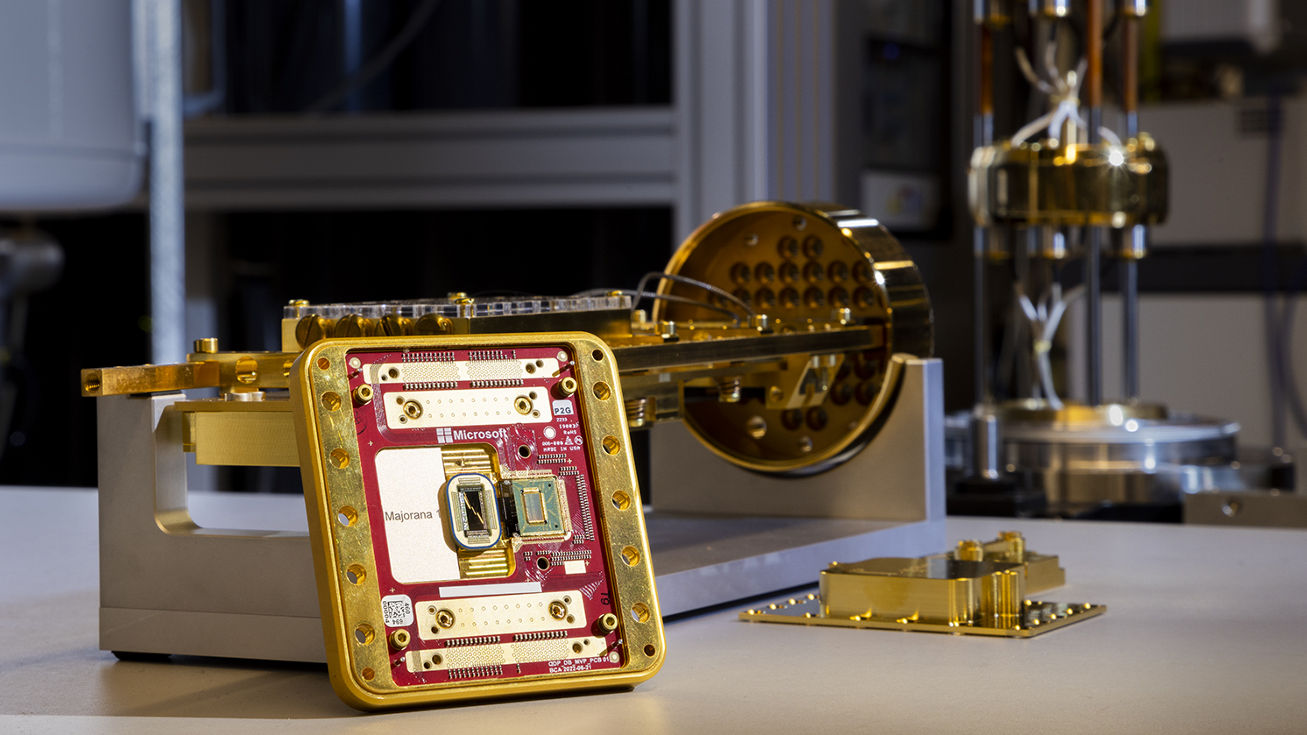
Microsoft’s Majorana 1 chip represents a fundamental breakthrough in quantum computing, merging decades of research with cutting-edge material science.
This innovative processor is designed to operate using a Topological Core architecture, which paves the way for more reliable and scalable qubits.
By leveraging the world’s first topoconductor, the chip promises a robust method to handle quantum information with minimal error rates.
The Majorana 1 chip is not only compact—small enough to fit in the palm of your hand—but also engineered for industrial-scale applications.
Ultimately, this technology is set to revolutionize fields ranging from materials science and healthcare to environmental sustainability and beyond.
Innovative Technology
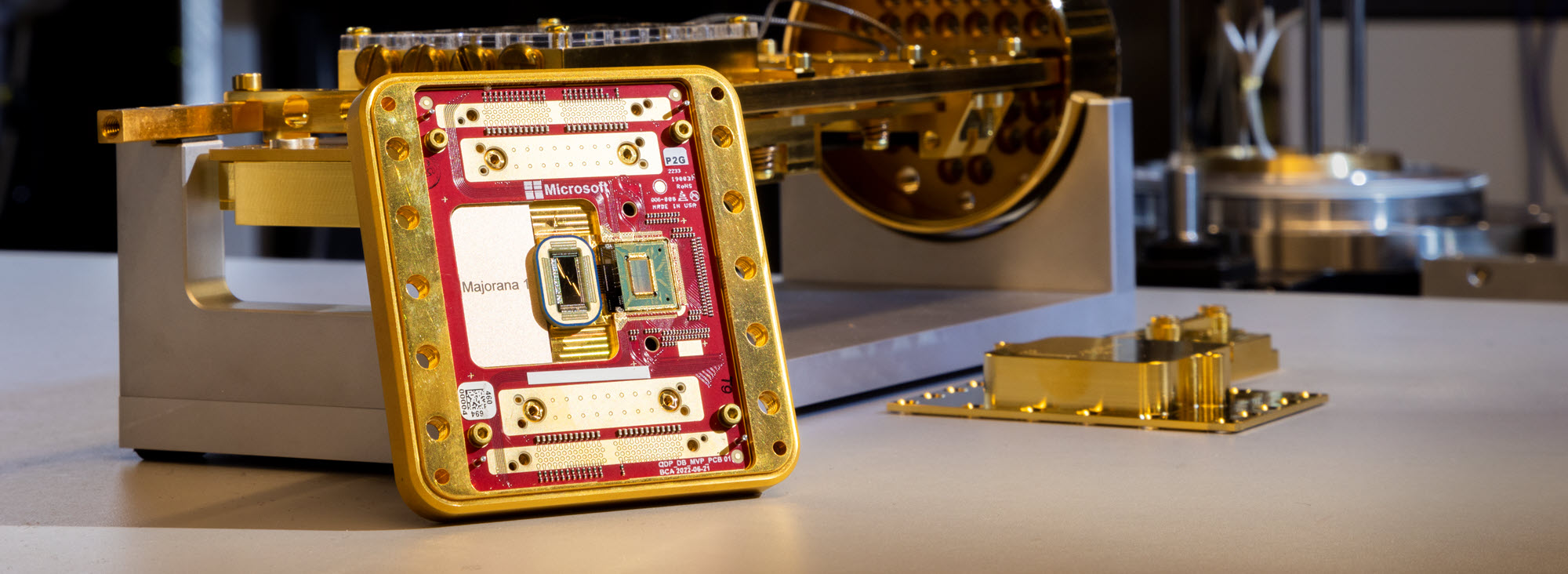
The core innovation behind the Majorana 1 chip lies in its use of a topoconductor—a breakthrough material created atom by atom.
This new state of matter enables Microsoft to generate and control exotic Majorana particles, which serve as the building blocks for stable qubits.
Unlike conventional materials, the topoconductor offers enhanced stability, allowing for faster, more reliable quantum operations.
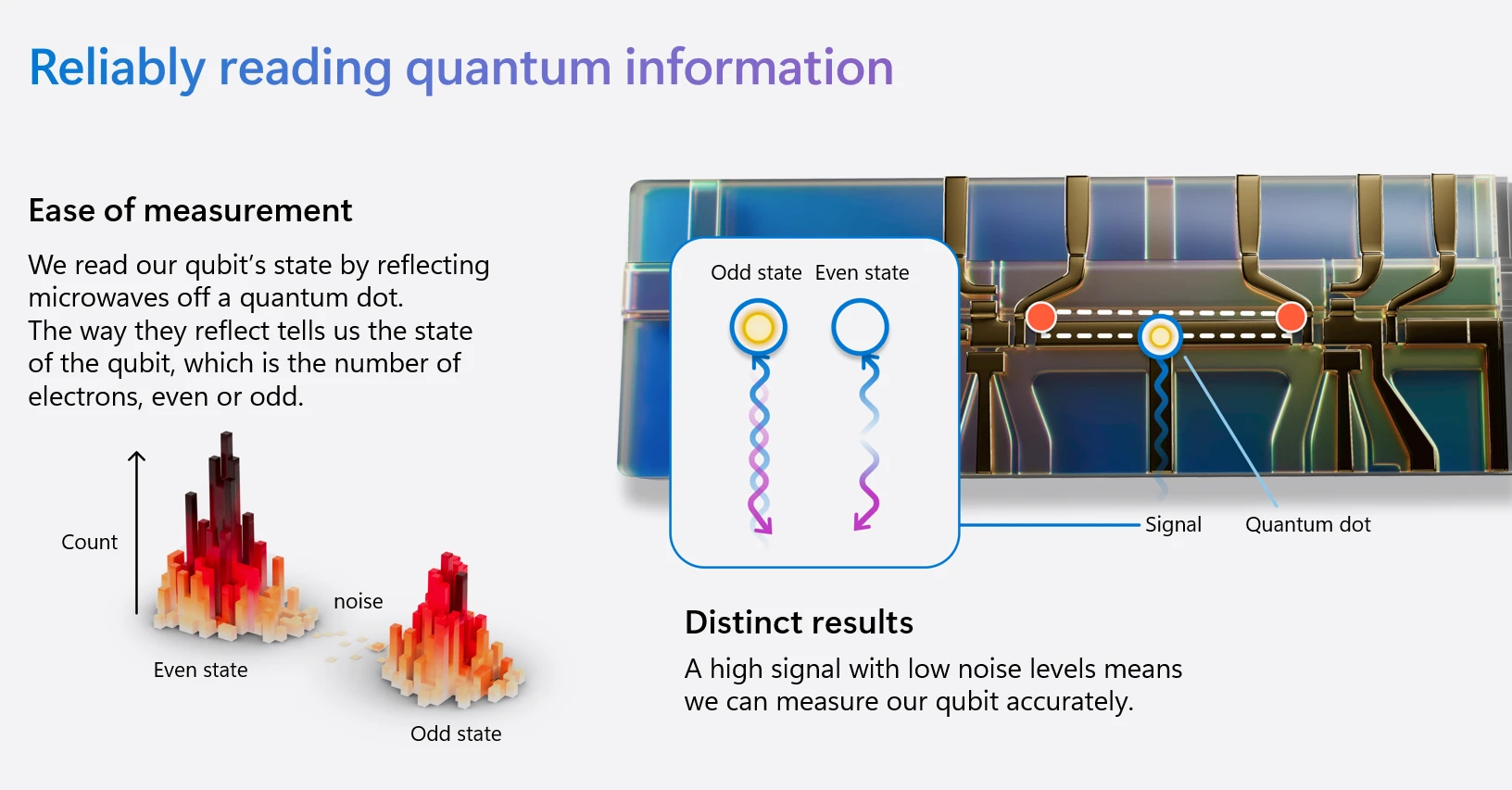
The chip employs a digital measurement approach that uses voltage pulses to read qubit states with unprecedented precision.
Furthermore, the integration of superconducting nanowires made of indium arsenide and aluminum sets a new benchmark in quantum chip fabrication.
Applications and Impact

The potential applications of Majorana 1 are vast, offering new possibilities in designing materials and solving complex computational problems.
In the realm of materials science, the chip could lead to the development of self-healing materials capable of repairing infrastructure damage.
Its computational power can accelerate drug discovery by accurately simulating molecular interactions that are beyond the reach of classical computers.
Environmental applications include designing catalysts to break down microplastics and reduce carbon emissions effectively.
Overall, this quantum chip stands to transform industries by enabling solutions that are currently deemed computationally impossible.
Scalability and Future Prospects
Microsoft’s approach with Majorana 1 is designed with scalability in mind, targeting a future where one chip can support one million qubits.
The architecture incorporates error-resistant qubits that reduce the need for complex error correction, making large-scale quantum computing feasible.
This scalable design is key to unlocking trillions of operations per second, a requirement for solving real-world industrial problems.
The digital control system simplifies qubit management, promising faster computation times and reduced latency in quantum operations.
Looking ahead, Microsoft envisions a new era where quantum computers accelerate scientific discoveries and revolutionize multiple sectors.
Challenges and Future Roadmap
Despite the promise, several technical challenges remain before quantum computing can be fully realized in commercial applications.
One significant hurdle is maintaining qubit stability as the system scales, which requires continuous refinement of materials and control mechanisms.
Researchers must overcome issues related to environmental interference and the precise alignment of atoms during chip fabrication.
Microsoft is actively working on advanced error-correction techniques to address these challenges, paving the way for a robust quantum ecosystem.
The company’s future roadmap includes expanding from the current eight-qubit prototype to a full-scale, million-qubit processor, with rigorous testing and iterative improvements along the way.
Industry Impact and Quantum Society
The introduction of Majorana 1 has significant implications for industries that rely on high-performance computing and complex simulations.
Quantum computing is poised to disrupt sectors such as pharmaceuticals, finance, logistics, and energy by providing solutions to problems that are currently unsolvable.
As quantum technology matures, companies will need to adapt, integrating quantum computing into their traditional IT ecosystems.
This paradigm shift will also influence education and workforce training, emphasizing the need for quantum literacy and interdisciplinary skills.
In a broader societal context, the evolution of quantum computing could spur innovations that address global challenges like climate change and food security.
Conclusion

Microsoft’s Majorana 1 chip marks a milestone in the journey toward practical quantum computing and heralds a new era in technology.
The integration of topoconductors and a Topological Core architecture offers a promising solution to longstanding challenges in quantum hardware.
While technical hurdles remain, the progress demonstrated by Majorana 1 is a clear indicator that scalable and reliable quantum systems are within reach.
Through continuous research and innovation, Microsoft aims to bring quantum computing from the laboratory to real-world applications in the near future.
This breakthrough not only redefines the limits of computational power but also opens up a world of possibilities for industries and society at large.
Comments
Post a Comment